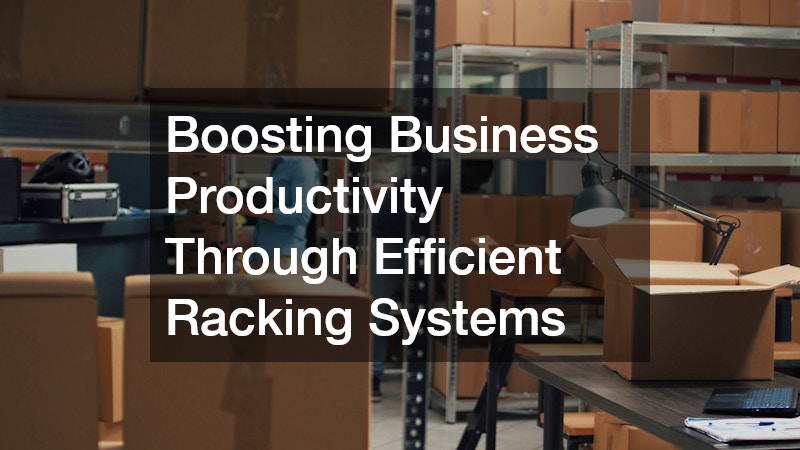
In today’s fast-paced business environment, maximizing operational efficiency is crucial for survival and success. One often underappreciated driver of productivity is the implementation of efficient racking systems in warehouses and storage facilities. These systems transform how a business manages space, inventory, and workflow by optimizing available footprint and ensuring goods are easily accessible.
Core Benefits of Efficient Racking Systems
Efficient racking systems significantly increase storage capacity by capitalizing on vertical space. By utilizing taller racks and optimizing floor layouts, companies can store larger volumes of inventory without expanding their physical footprint or incurring additional real estate costs.
These systems are highly adaptable, accommodating various sizes and weights of inventory to help handle seasonal demand shifts while maintaining a robust supply chain that prevents costly stockouts.
Beyond spatial gains, strategic layout design allows for intuitive inventory placement, drastically reducing the time employees spend searching for and retrieving items. Streamlined access speeds up loading, unloading, and order picking while maintaining a clean, uncluttered workspace that lowers safety risks. Modern racking systems are engineered from high-quality materials to withstand industrial wear and support heavy loads, protecting workers and reducing structural collapse risks. Secure layouts also facilitate controlled access to high-value goods and keep emergency paths clear for proper fire safety compliance.
The financial and operational impacts are substantial. Fully leveraging existing square footage eliminates the need for expensive building expansions or extra property leases, while reduced spatial footprints lower utility overhead such as heating and cooling. Furthermore, optimized retrieval routes minimize manual handling labor, enabling employees to focus on value-adding tasks, boosting morale, and processing higher order volumes with speed and precision.
Selecting and Planning the Right System
Choosing an effective system requires thoroughly assessing inventory volume, material weight, stock rotation frequency, and building layout constraints. Physical limitations like ceiling heights, floor load capacities, and aisle widths dictate rack selection. Utilizing tools like 3D modeling during planning helps design optimal configurations that ensure safe forklift clearance, emergency access, and long-term structural integrity.
Different operations call for distinct racking types:
-
Pallet Racking: Ideal for high-volume palletized goods, offering height and load flexibility.
-
Cantilever Racks: Designed specifically for long, bulky materials like timber and piping.
-
Drive-In / Drive-Through Racks: Provide high-density storage for uniform goods by allowing forklifts to drive directly into aisles.
-
Automated Systems: Integrate technology like AGVs and conveyors for rapid, high-volume handling.
Prioritizing modular racking systems allows for seamless vertical or horizontal expansion as business grows, preventing expensive structural overhauls down the road.
Overcoming Implementation Challenges
While upfront procurement and installation costs for high-quality racking can be substantial, long-term labor savings and spatial efficiency quickly balance these initial expenses. Companies can utilize staged rollout strategies to spread costs over time. Complex physical obstacles—such as irregular building shapes or uneven flooring—can be overcome through custom configurations or automated storage solutions.
Operational maintenance and regulatory compliance are critical for long-term success. Daily heavy wear requires routine safety inspections and prompt repairs to preserve rack integrity. Racking setups must comply with local safety standards, OSHA rules, and fire codes through proper load labeling, safety barriers, and clear aisles. Finally, aligning physical racking changes with modern Warehouse Management Software (WMS) ensures a seamless transition with minimal downtime.
Streamlining Inventory Control and Future Outlook
Structured racking layouts drastically simplify inventory management by providing enhanced visibility for real-time stock monitoring. Designated, clearly labeled rack locations minimize lost items and support strict inventory rotation strategies like First-In, First-Out (FIFO) or Last-In, First-Out (LIFO). Combining organized physical racking with barcode scanners or RFID tools ensures precise stock recording, faster order processing, and reliable data reporting.
Looking ahead, warehousing technology continues to evolve rapidly. Modern facilities are increasingly adopting automated picking robotics, digital inventory solutions using IoT sensors for real-time rack integrity monitoring, and sustainable, recyclable structural materials. As e-commerce demands shift, custom modular systems enable rapid reconfigurations, making optimized racking a vital strategic investment for scalable business growth.
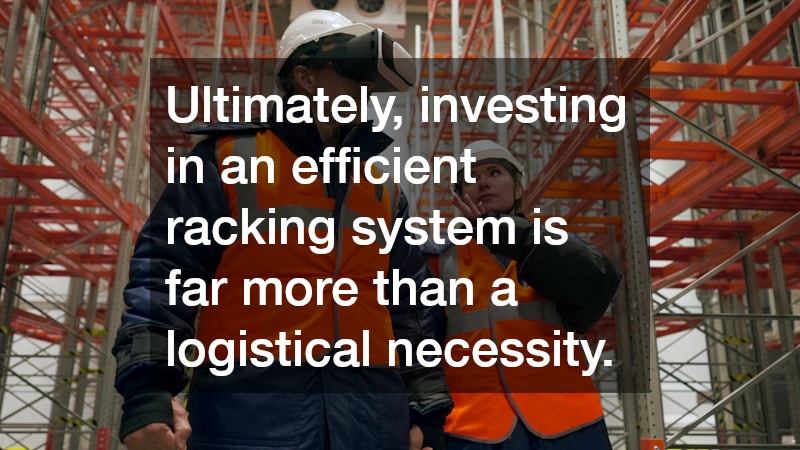
Ultimately, investing in an efficient racking system is far more than a logistical necessity—it is a strategic driver for long-term business growth. By optimizing vertical space, streamlining inventory workflows, and integrating modern warehouse technologies, organizations can significantly reduce operational costs while improving workplace safety and productivity. As supply chain demands continue to evolve, establishing a scalable, well-planned racking infrastructure ensures your warehouse operations remain agile, resilient, and competitive.